
Impossible Challenge Accepted!
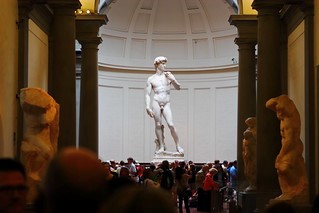
How to make defining moments in your life. I’m reading the book 10x Is Easier than 2x: How World-Class Entrepreneurs Achieve More by Doing Less by Dan Sullivan and Dr. Benjamin Hardy. The authors call attention to Michaelangelo taking on impossible projects. That is, they were way beyond his current capability throughout his life. This habit of accepting the…
Have Confidence in Your Expertise! Tune in to the MINDSHIFT Podcast.
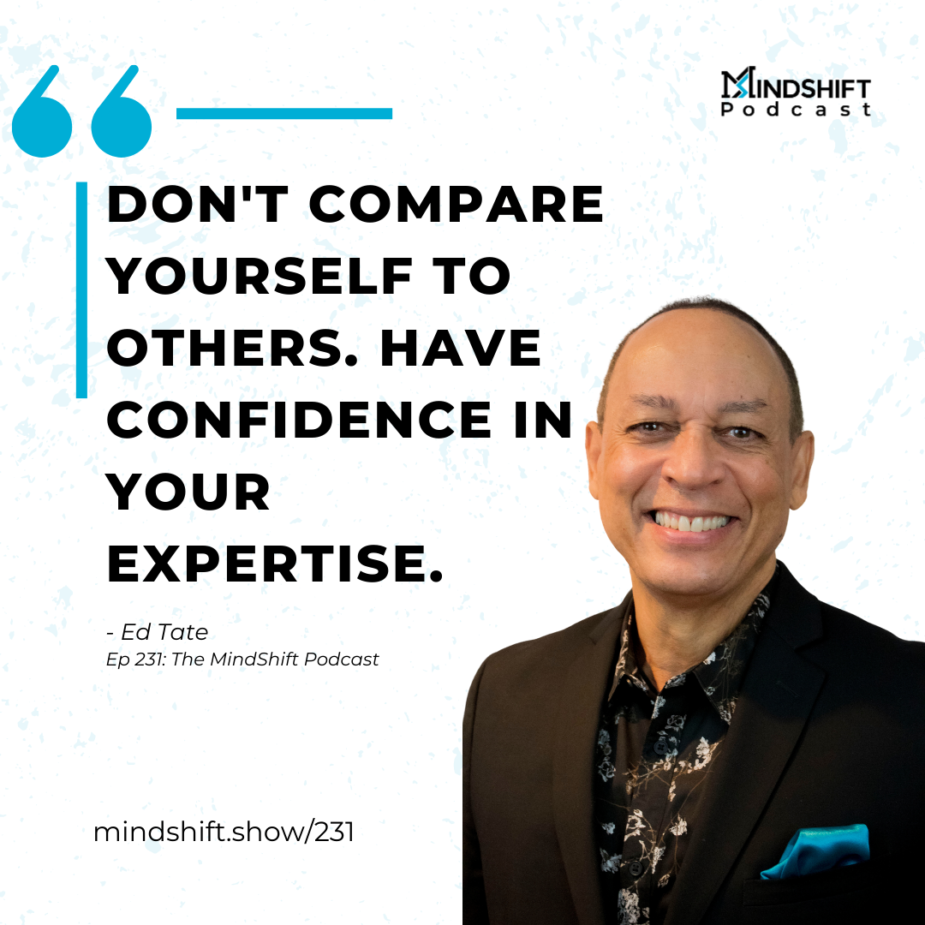
Listen in to the MindShift Podcast episode as host, Darrell Evans, and I discussed high-stakes presentations, fear of people, three wrongs of public speaking, storytelling and much more. We hit on these topics: Learn the key elements to win your High-Stakes Business Presentation. Hear my winning preparation for the World Champion of Public Speaking title. Find out…

How to Lose $300 Million, With One Bad Habit
Pete Moyer told me a story about a company with a high-stakes presentation. It was worth $300+ Million. The company was prepared, except for one bad habit. This habit occurs so often in our culture that it is invisible… Until it’s too late. As the primary speaker presented on stage, his co-presenters stood behind him – LOOKING AT…

Three Wrongs Don’t Make a Profit
Over recent weeks, I’ve seen a trend among my clients and colleagues that concerns me. When it comes to landing new business, they’re repeatedly committing three wrongs: Talking to the wrong person. Conducting the wrong conversation. Approaching the sale with the wrong mindset. For instance, a buddy of mine often shares his great talks with…
Relationships Rule
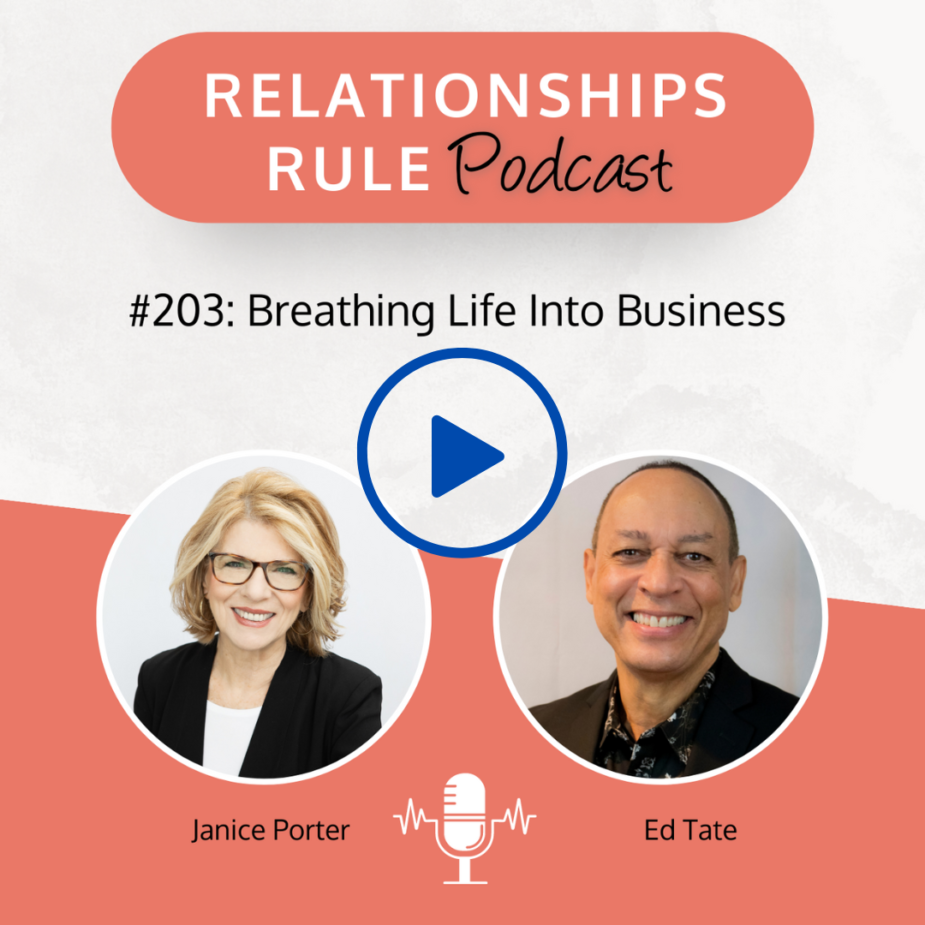
Listen in to my interview with podcast host, Janice Porter. We discussed several key points related to effective business presentations and I also shared three elements of an effective presenter and described my story finder process for identifying compelling narratives. Ordinary stories are often the best stories! In this episode you will learn: What does…

Secrets To Be A Better Speaker Like Oscar Winners Michelle Yeoh And Jamie Lee Curtis
Secrets To Be A Better Speaker Like Oscar Winners Michelle Yeoh And Jamie Lee Curtis Written by Henry DeVries You might not get to give an acceptance speech at the Academy Awards, but you might get a moment in the spotlight accepting an award. If you want to attract right-fit clients, it pays…

Don’t get ready. Stay ready!
Don’t get ready. Stay ready! -Craig Valentine On Friday at 11:11 PM, I receive a desperate text from a client. “Our keynote speaker is stranded in Atlanta. Can you take his place at 8:30 tomorrow morning at the MGM Grand in Las Vegas?” I thought… Oh, S**t! I’m a planning, preparation,…
PART IV: Practice Like A Pro – 20 Ways to Rehearse Your Presentation
Practice builds confidence and profits. Below you will find the final presentation rehearsal techniques (#16-20) to build your confidence. 16. Practice Daily. 17. Mental Rehearsal. Have at least one mental rehearsal. That is, rehearse the entire speech in your mind rather than audibly. 18. Physical Rehearsal. Practice while working out. Hall of Fame Speaker Patricia…

Part III: Practice Like a Pro – 20 Ways to Rehearse Your Presentation
Practice builds confidence and profits. Below you will find presentation rehearsal techniques (#11-15) to build your confidence. 11. Avoid perfection. We are looking for progress and success. 12. Be conversation, not presentational. Imagine you’re talking to your best friend over coffee. 13. Practice with your equipment (Both live and Virtually) Live. If you…

Part II: Practice Like a Pro – 20 Ways to Rehearse Your Presentation
Practice builds confidence and profits. Below you will find presentation rehearsal techniques (#6-10) to build your confidence. #6 Going Over the Top! (GOTT) for a detailed explanation, https://edtate.com/going-over-the-top/) This method of rehearsal is guaranteed to break through your mental glass ceiling. If you play full-out, you will never be concerned with what other people think…

Part I: Practice Like a Pro – Tips One through Five of 20 Ways to Rehearse Your Presentation
“One minute of preparation will save you 10 minutes of rambling” – Ed Tate One of the biggest mistakes you can make when presenting is not rehearsing. If you’re not prepared at your organization, it could impact your career. If you’re not prepared with a prospect, you won’t get the business. Rehearsing gives you confidence.…
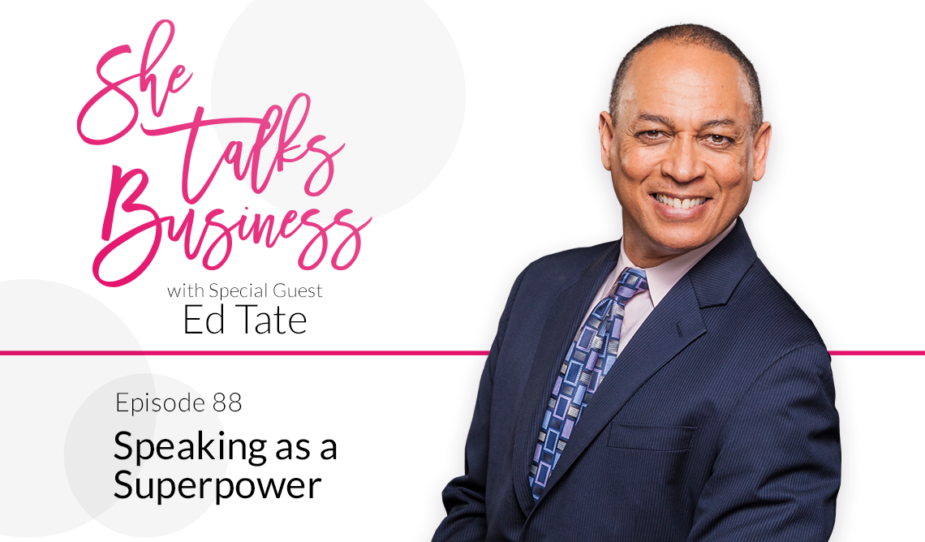
Speaking as a Superpower
How you deliver any presentation has a direct impact on how an audience will respond. Listen in as Lisa Larter interviews me on her #SheTalksBusiness podcast. #pitchdeck #pitch #highstakespresentations #businesspresentations #storyselling Show Notes: Public speaking is something that probably makes the majority of people shake in their boots, and that is the very reason this week’s guest is someone that I…

Turn Leftovers Into Makeovers!
My wife, Sarika, rarely likes to do the same thing twice. Let’s take food as an example. She is a fantastic cook. I would never describe myself as a ‘foodie.” Food, for me, is about sustenance. I’ve never had a favorite food. And can barely remember what I had for lunch. She never eats leftovers.…

Convert Browsers Into Buyers with Chat!
“Browser” once meant a person who looks casually through merchandise for sale–at a brick-and-mortar retail store. It was not associated with web browsers such as Chrome, Firefox, or DuckDuckGo. During the Jurassic era, when dinosaurs roamed the earth and there was no such thing as online, I worked as a part-time commissioned salesman for a…

Win or Go Home
“…If you had one shot, or one opportunity to seize everything you ever wanted – one moment… Would you capture it or just let it slip?” – Lose Yourself by Eminem 8 Mile Soundtrack The cliché often used during the playoffs is Win or Go Home in professional sports. The best definition of a high-stakes presentation is Win…

We didn’t buy the Bourbon…We bought the story.
I’m at the Tano Bistro restaurant, just outside of Cincinnati, having dinner with my client and 10 of his top employees. I was the featured speaker at this high-tech firm’s second-half kickoff meeting. We are all enjoying ourselves. The company is ahead of its sales projections, headed towards another record year. Our waitress asks us…

Belief-Checking: There’s an App for That!
My wife, Sarika, is sick and tired of being sick and tired. Our daughter, Tauriel, recently turned three years old. It had been three years since she struggled to lose that last 10 pounds after giving birth. Two months ago, she tried intermittent fasting and dropped 15 pounds! She’s happier. More confident. Her old clothes…

Think Like a Contrarian
“When everyone thinks the same, nobody is thinking.” –Walter Lippmann, Journalist, Writer, and Political Commentator To breathe life into their business presentations, I have coached thousands of executives, leaders, managers, entrepreneurs, salespeople, and Toastmasters. I CAN BREAK DOWN THE CONTENT OF THEIR PRESENTATIONS INTO TWO CATEGORIES: Conformity Contrarian What is a conformist? A conformist is…

Sameness is the Enemy
“Sameness is the Enemy of the Presenter.” – Patricia Fripp Presentation Skills Expert Sameness is defined as looking and sounding the same during a presentation. The audience will tune out if your speech looks and sounds like others. This wisdom also applies when you are selling your products and services. Indistinguishability will extinguish the deal. Why…

Life Lessons: Learning from the Little Things
Business is booming. This month I have five speaking engagements – 4 are IRL: In Real Life. One trip is to Chicago. I’m reminded of a previous flight to the “Windy City,” where I sat next to a young man who was a private pilot. He taught me three valuable life lessons–literally! Anxiety is the enemy…
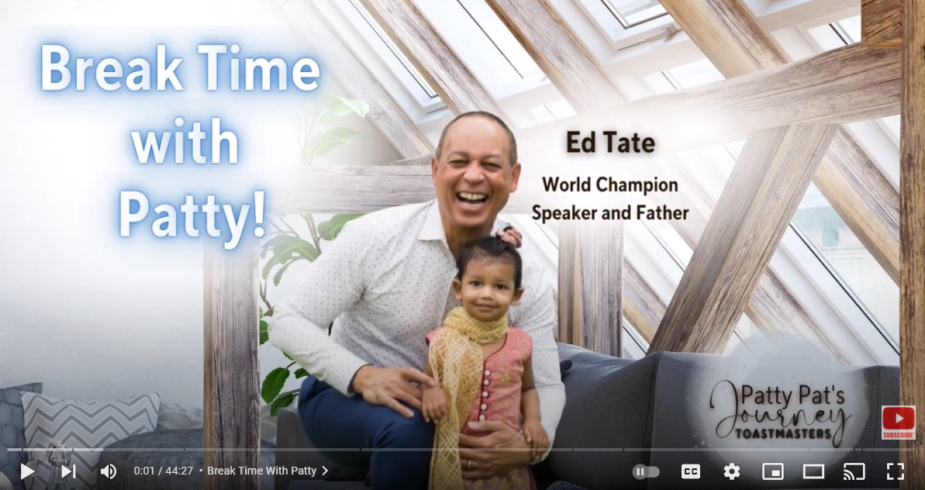
Break Time With Patty
Hosted by Patricia Calixte, the Break Time with Patty show recently aired an episode featuring my interview on a variety of timely topics. Don’t you say no before they say no. Never tap out, never take yourself out of the game.

Don’t Talk About It, Until You Can Laugh About It
Friends, I owe you an apology. I’m sorry for my delay or non-responses to both your birthday and anniversary wishes. On Monday, August 30th, my son David was hospitalized and fighting for his life. Over that weekend, he had been invited to a bachelor party by one of his work colleagues. One of the partyers…

The “I Can’t” Rant
“I can’t do this right now! I can’t change my schedule to prepare. I can’t speak into a camera without an audience! I can’t…” Those are the words of “Sarah”. She is in the middle of an I can’t rant – where a person is entirely focused on what you can’t do, rather than what they…
“Don’t Quit on a Bad Day!”
“You can’t quit on a bad day.” Grit: The Power of Passion and Perseverance by Angela Duckworth. I’m re-reading the best-selling book, Grit. The quote above is a part of the author’s Hard Thing Rules. It reminded me of when my son David was twelve years old. He was the starting fullback for the Aurora Youth League…
Dear Girlfriend Podcast with Ed Tate
Listen in HERE to my story as shared on the Dear Girlfriend Podcast, currently known as The Danielle Lacey Show. I share some personal insights on: ✅Not wanting to even compete as a speaker ✅The life-changing moment when he became a world champion speaker ✅Helping others become speakers ✅The love of being a dad The…
Finding Out What You DON’T Want
“Finding out what you don’t like is, paradoxically, as valuable as finding out what you do like.” – Susan Jeffers, PhD, Author: Feel the Fear and Do It Anyway. I’m rereading this classic bestseller, and this quote struck me. It reminded me of one of my first jobs after college. I took the highest-paying position…

Procrastination Disguised as Preparation
Procrastination has many disguises. My go-to disguise is preparation. For example, two weeks ago, I was on the coaching call with my coach Lisa Larter. Lisa wanted me to start posting again on social media after having two major surgeries (hip replacements) in 60 days. Insomnia, medication, and rehabilitation were over. I was hesitant and giving…

Coaching Creates Champions
On Sunday, 29-year old Hideki Matsuyama made history by being the first Japanese man to win The Masters golf tournament – one of the four most prestigious events in professional golf. I’m a casual golf fan. Beyond the usual suspects, Phil Mickelson, Rory McIlroy, and Tiger, I had never heard of him. However, he did…
The Legend of Pretty Ricky: Don’t You Say “NO” Before They Say “NO”!
Have you ever turned yourself down before asking for something that you really wanted? For example, you tapped-out before asking for a job, promotion, raise, or a date? In other words, you said “no” before they said “no.” You took yourself out of the game. In the words of the Hall of Fame speaker, Patricia Fripp,”The…
Nine No-No’s of Virtual Presentations
Interested in learning what not to do during your virtual presentations? Virtual training done well can be delightful. Done poorly, it can be disastrous. Darren, Mark & guest host Ed Tate, CSP take a deep dive into 9 NO-NO’s of virtual training and show how to avoid being boring, keep your attendees engaged, and ultimately…

Jane Atkinson’s Masterclass Interview
Learn about the traits of an epic presentation. We also cover the mistakes that speakers make. Press PLAY below! Don’t miss this unique interview!
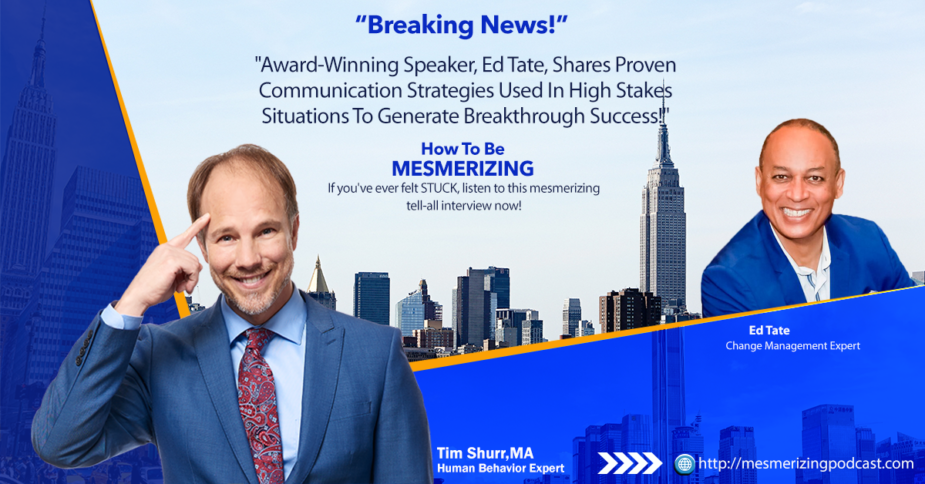
Building Powerful Alliances Ed Tate and Tim Shurr
Click play below to listen in! I was recently interviewed by Tim Shurr! During this mesmerizing conversation, I share proven leadership and communication formulas for building powerful alliances and mergers in high-stakes situations!

You’re a Fortune Teller – Testing Your Emotional Reset Button
What if I told you that you could predict the future? Would you believe me? I’ll prove it to you. On New Year’s Eve, what are some behaviors you expect to witness? Fireworks Countdown Alcohol People Singing Badly What about the 4th of July? (Or your country’s birthday, if you are reading this outside of…

Beware of Mock Mentors – How to Handle Harsh Criticism
“You are no good as a speaker! All you do is talk about yourself! You’re not that interesting! The National Speakers Association (NSA) is the Chinese food of education – it fills you up for a while and leaves you hungry! And CareerTrack (a training company) is worse than NSA – they sell Happy Sheets!…

Moments Over Money
Jake Young is a member of my mastermind group and a real estate investor. http://collaborativeco.com/ I admire Jake for many reasons. His business acumen. The advice he has given me. How he lives his life. Recently, a seller called Jake on a Thursday. They wanted to sell their property and for Jake’s company to make them an…

Think Like a Genius!
In 2004, I met a genius. Nowadays, I realized that this term is loosely used and passed out like Halloween candy. However, Todd Siler is an actual genius and a modern-day renaissance man. He has a Ph.D. from MIT in psychology and … Art. That’s right. I said art! He is the first person ever…

Giddy Up, Grimace 😬 & Go!
“It’s fear of fear you fear. The fear itself hurts more than the thing you are scared of.” – Darren Hardy, Editor of Success Magazine I hurt my back while exercising. It was my first back injury–ever! I quickly discovered that the back is the structural foundation of our body. It affects all movement –standing,…

I Went to Prison for This
“Tomorrow, do not wear aftershave or cologne.” It’s BC – Before COVID. I had just finished a speaking tour. I’m in Miami, having dinner with my wife, Sarika, and Chim Francisco – a Toastmasters District Director for Southern Florida. On this tour, Chim had gotten me a few Fortune 500 speaking engagements, and I was…

The Hidden Door to Your Success: How to Get What You Want Without Upsetting Others!
“Life, business, success … it’s just like a nightclub. There are always three ways to get in. There’s the first door – the main entrance, where 99% of the people wait in line hoping to get in. The second door – the VIP entrance, where the billionaires and celebrities slip through. But what no one…
Hook Your Audience in ONE Minute!
Recenlty, I was interviewed by Ajay Mathur, host of the “Being Yourself” podcast. He asked me about some of the techniques we use to help people present with more impact and influence. Here are the topics we covered: 01:24 Why the first one minute is vital. Don’t waste it! 03:55 Sharing his ‘why’ and how once…

Going “Over the Top”
They were screaming and yelling in the room next door, hooting and hollering, banging on the walls, and stomping on tables. In a moment, find out how this behavior can make you a better speaker. Recently, BC – before COVID, I was coaching a group of executives to breathe life into their business presentations at…

Present Like a Pro – Even With No Pants On!
“You need to engage participants every 4 minutes [online].” – Becky Pike Pluth, M.Ed., author of Webinars With Wow Factor Recently, during one of our Mastering Virtual Presentations online workshops, one of our students was a multi-tasking millennial know-it-all. He knew every technical aspect of the online platform we were using – and he let us know…

Reflections: 2020 Has Been a Long Decade
The year began with the global pandemic. Enough said. #COVID-Exhausted! Now, the second wave has hit. Not coronavirus! Instead, a wave of global protests over police brutality. Honestly, I’ve been struggling with what to say. I have friends and family on both sides of the debate. I have friends who are police officers. One of…
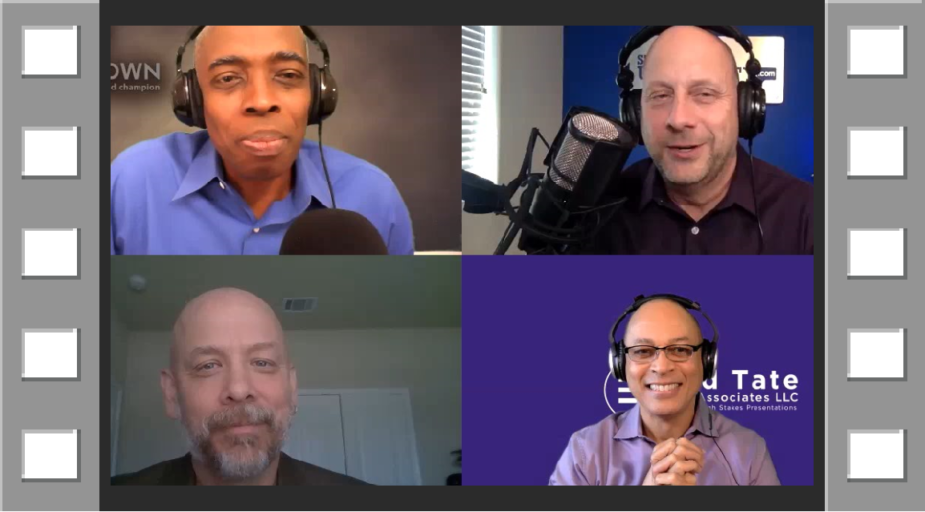
How to Bounce Back From Losing
<h1 style=”text-align: center;”>How to Bounce Back From Losing</h1> <iframe src=”https://player.vimeo.com/video/434836126″ width=”640″ height=”480″ frameborder=”0″ allowfullscreen=”allowfullscreen”></iframe> At Ed Tate & Associates, we help organizations and individuals win high-stakes presentations. As the cliché goes, you can’t win them all. However, you can learn from your losses and be prepared to win the next time. Here is an…
Seven Seconds of Terror – How I survived (and even thrived) after forgetting my lines during a keynote speech.
I could hear the words of encouragement coming from an audience of thousands when I was giving the keynote speech at the 2016 Toastmasters International Convention in Washington, D.C. “Come on, Ed, you can do it!” “Take your time. You can remember your speech!” It was my worst fear. It was every speaker’s worst fear:…

Have You Watched Your Video Selfie?
Did you know that a selfie is one of the best ways to improve your presentation skills? Not that type of selfie! I’m talking about a video-selfie a.k.a., – playback of your presentation. Professional athletes watch the video of their performances as a part of their preparation. Maybe this is one of the reasons why they…

Premature Presentation© – Do you suffer from this ailment?
“Prematurely presenting your product or service will steal from the persuasive [power] of your presentation.” –David Hoffeld, “The Science of Selling” Imagine that you are at the Consumer Electronics Show (CES), in Las Vegas. Over 150,000 people from all over the world attend this annual pilgrimage of nerd nirvana! Everything is a blur. There are…

Fake Fun! Avoid the Comparison Game!
“Real life is not someone else’s social media highlight reel.” – Nick Huff Our good friends Ryan and Stephanie invited my wife and me to the exclusive Hyde Nightclub at the Bellagio Hotel & Casino in Las Vegas (photo above). It’s packed! It’s Tuesday night! Did I mention it was Las Vegas? I noticed an unusual pattern. Approximately 15 to…

Inadequate Time Frames: When to Say NO!
Last week, I was approached by a Fortune 25 company to train 15 interns for their final presentation before a business unit Vice President and his leadership team. High-Stakes Presentation This presentation is high-stakes for both the company and the interns. The Company Concerns: Did we choose the right interns or was it a miss?…

Not All Shortcuts Are Short
Recently, I called a repairman to fix a squeaky refrigerator door. We have one of those fancy, stainless steel, blah-blah-blah models. Every time the door would open, it would make a loud, squeaky noise. Unintended consequences (side benefit): It was two weeks before there was an available appointment; I scheduled it. In the meatime, I…

The Wisdom of a Champion Comes Through
Interview by Kate McClare, ACS, ALB Photos by John Schneyer, DTM Professional speaker, coach and leadership consultant Ed Tate won the World Championship of Public Speaking in 2000 — his first attempt. His clients include Darren Tay, the 2016 World Champion. Tate shared advice (and lots of great stories) in several presentations at the Spring…

20 Business Presentation Mistakes: Part 3: Are you making these career-damaging blunders?
In Part 1 & part 2 of this post, we revealed thirteen (13) common business presentation mistakes that could sidetrack your business presentations. If you haven’t read this series from the beginning, I highly recommend you stop here, and go back to Part 1 HERE. Below are the final seven: Opening slow or long-winded. In…

20 Business Presentation Mistakes: Part 2: Are you making these career-damaging blunders?
In Part One of this post, (found here), we revealed six common business presentation mistakes that could sidetrack your business presentations: Presenting Abstract Ideas (without specific examples). Simply put, your ideas live in the clouds and never visit earth. For your audience to relate to abstract concepts, match with specific, concrete examples. JargonOveruse. Jargon overuse…

20 Business Presentation Mistakes: Are you making these career-damaging blunders? – Part 1
Over the past fifteen years, I’ve coached thousands of executives, leaders and corporate employees on how to make their business presentations memorable. Over the years, I’ve regularly run across the same presentation mistakes. Are you making these mistakes in your business presentations? Presenting abstract ideas without specific examples. Think of an abstraction as hiding the…
Are you Speaking or Training? 5-Steps to Design Training in 15 Minutes!
On Saturday, August 20, 2016, my coaching client, Darren Tay, won the Toastmasters International World Championship of Public Speaking. CLICK HERE TO LEARN MORE. For the unfamiliar, it is a yearlong contest with over 30,000 contestants. Darren was the last one standing. Think of it as “America’s Got Talent” for public speaking. Not bad. In…

Do Your Business Presentations Carry Crutch-Cargo?
Do your business presentations carry Crutch-Cargo? Worse! Do you have a case of Crutch-Cargo and don’t know it? But your colleagues, customers, and prospects know you have a bad case of Crutch-Cargo! How is this damaging your career? Business? Reputation? What is Crutch-Cargo? Crutch-Cargo can be unnecessary words, phrases, or utterances used when you speak.…

The Ultimate Pithy Editing Tool
Two speakers I admire for their pithiness are Patricia Fripp and Craig Valentine. In fact, Craig has named pithiness – A Foundational Phrase. A foundational phrase is 10 words or less that encapsulates your topic. For example, “Don’t get ready! Stay Ready!” Valentine and Fripp come up with these short, sweet phrases all the time.…

A Selfie-Strategy to Improve Your Presentations!
Today is National Selfie Day! Who knew? I’m sure Kim Kardashian has plans. I want to share with you a 2-Step-Selfie-Strategy that will make you a better presenter. Ready? Here it is! 2-Step Selfie-Strategy: Step 1: Video-Selfie Every Presentation. That is, video record every business presentation Step 2: Watch what you recorded! I can’t tell…

Got Presentation Rust? 3-Steps to Shake-off Presentation Rusty-Habits!
“The best way to shake off ‘ring rust’ is to go to the gym.” – Jon Jones: Professional fighter and UFC Light-Heavyweight Champion Ring Rust After a 476 day layoff, the longest of his career, professional fighter and UFC Light-Heavyweight champion Jon Jones was asked before his next fight, “How do you fight off “Ring…

The Death Spiral
Early in my career I worked for a major computer company. Before we were unleashed on the world, we had to go through the typical technical and sales presentation training. Regardless, if you were prepared or not, you had to give your presentation to the instructor and your peers at the end of your training.…

Who is Your Satellite (Mentor)?
“We all have mentors. They recognize the talent we don’t see under our own noses.” Jason Hewlett – Entertainer According to Wikipedia, there are three types of satellites: Natural Satellites – also called moons Artificial Satellites – objects intentionally launched into orbit, such as communications and weather satellite Another Type of Satellite? There is a…

The Selfie Challenge! Selfie the Truth!
Review Yourself In football, the team, and specifically the quarterback, watches film/video of their previous performance. The purpose is to see: What they did right. What they did wrong. How they can improve next time. It’s called a debrief. In addition to sports, corporations, the military and the fields of engineering and project management conduct…
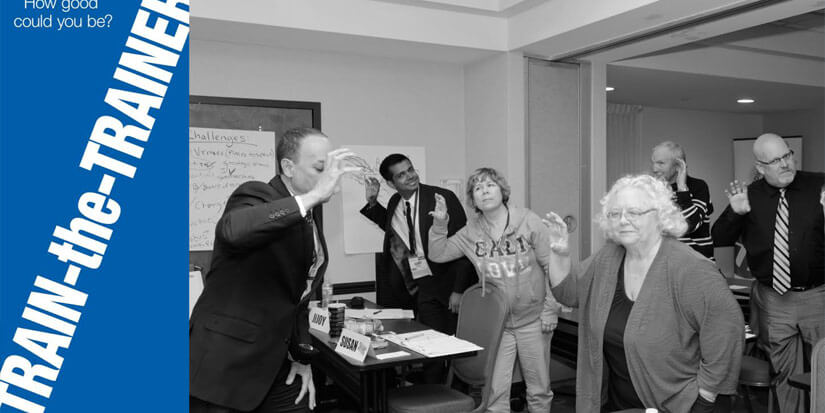
How to Start
I am often asked, “How did you start your business?” “How did you shift from corporate America to entrepreneurship?” “How did you make that leap?” One of my favorite blog posts on this subject is by Leo Babuta of Zen Habits. Enjoy – ET How to Start “There are two mistakes one can make along…
Are You a Professional or an Amateur? When Will You Go Pro?
“There is no room for the dilettante in this business” Are you a professional, an amateur, or a dilettante? Worse than an amateur is a dilettante. A dilettante is defined as a person who cultivates an area of interest, such as the arts (speaking), without real commitment or knowledge. Synonyms: non-professional, non-specialist, layman, layperson, dilly-dallier.…
How to Make Your Message Sticky
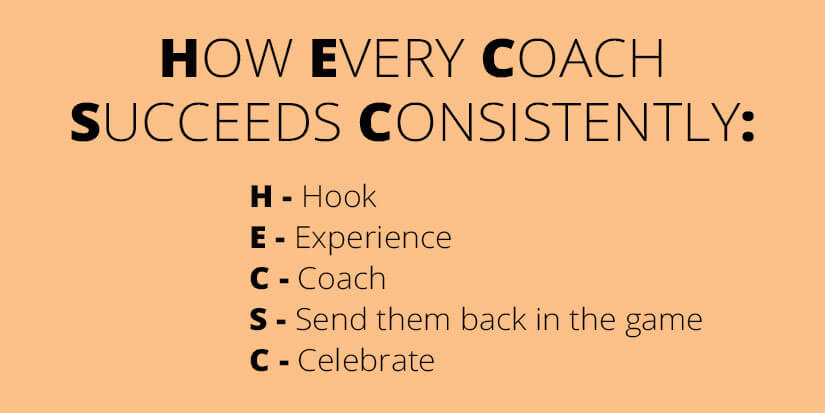
What if you had a method to make your message memorable, or sticky, every single time? What if you could hook your audience on your content whenever you wanted. Would you be interested? Earlier this month, I got a chance to spend some time with one of my training mentors and heroes, Sarah Singer-Nourie. She…
How to Speak to a Tough Crowd
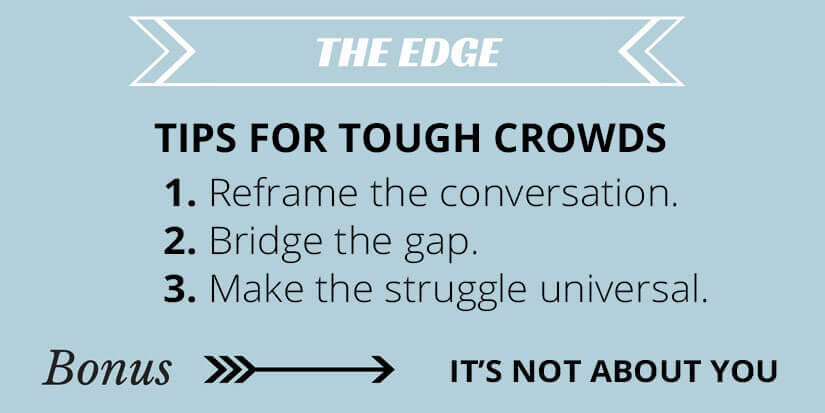
One of the most nerve-wracking things a speaker or businessperson gets to do is speak to a tough crowd when they already know that their message has been rejected. On top of the typical nerves that come along with giving just about any speech, you are also worried about rejection on a personal level. How…
9 Benefits You Can Provide to Others
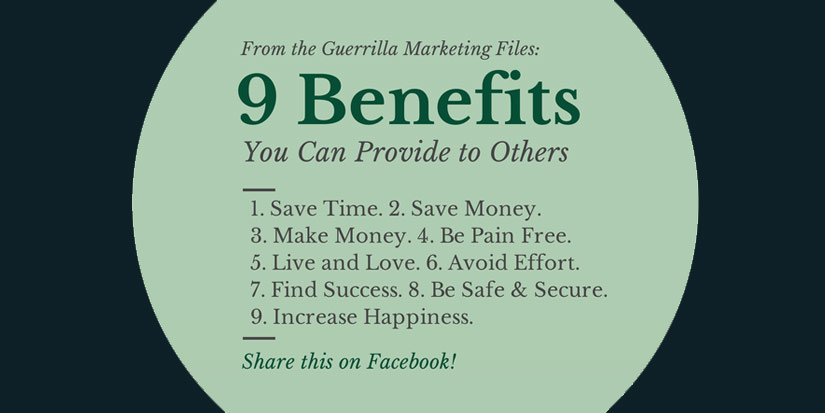
If you’re taking advantage of the techniques I discuss in Guerrilla Marketing, you’re probably already working to make your target market aware of the results and benefits you can provide to others. In sales – and ultimately we are all in sales – it’s important to sell the result, not the product itself. People don’t…

Reasons to Be a Contrarian (At Least for a Day)
con·trar·i·an noun \kən-ˈtrer-ē-ən, kän-\ : a person who takes an opposite or different position or attitude from other people Are there benefits to being a contrarian? Most of us are not contrarians by nature. In our culture it is simply safer to go with the flow and not make many waves. It’s easier – in…

6 Ways to Increase Your Influence
Whether you’re starting out in an entry-level position or you are the CEO, you have things that you want to accomplish, and you want your voice to be heard. Perhaps you’ve been researching your field and realize that in order to keep up with your competition, major changes need to be made. Or maybe a…

10 Box Office Hit Storytelling Rules
What can the moviemaker, Pixar, teach you to make your next story a box office hit? Pixar Animation Studios has created some of the most magical, memorable, and mesmerizing movies of all time. For example, Finding Nemo, Toy Story, and Up! all have worldwide gross revenues in excess of $725 million each. What, you ask…

Lessons Learned from a 2013 Toastmasters World Champion of Public Speaking Finalist
29-year old, Shurooq Al Banna, is the first Arab to compete in the finals of the Toastmasters World Champion of Public Speaking contest. She is a Master of Strategic Marketing graduate from the University of Wollongong in Dubai. Her prize-winning speech, Finding the Pearl, touched on the importance of looking past people’s external appearances to find…

Don’t Be a “Cover Speaker!” 7 Tips for Finding Your Voice
How can Benjamin Franklin and Lil Wayne teach you how to find your voice and be an outstanding presenter? There are no cover bands in the Rock & Roll Hall of Fame. Comparably, there are no “cover speakers” in the CPAE Speaker Hall of Fame. A “cover speaker” is a speaker who uses other people’s…

The Six Stories That Presenters Need to Know How to Tell: An Interview with Christie Ward, CSP
This week, I am honored to present an interview with nationally acclaimed leadership and communication expert, Christie Ward, Leadership Facilitator and Principal of the Impact Institute™. Since founding The Impact Institute in 1999, Christie has focused on communication, leadership and team-building topics that result in more productive teams and effective leadership. She is known for…

Escape the Cage of Rage: How to Overcome a Negative Relationship
“Ed, you are 100% responsible for this problem!” “What! Let me get this straight! I’m 100% responsible and you are 100% innocent! Is that what you are saying?” “Yes!” “Then there is no point in continuing this conversation!” “Click!” I hung up the phone in anger. By the way, the opening dialogue is not how…

The Secret of the Inspirational Speech: From Descriptive to Generative
How would you like to inspire your next audience like your favorite clergyman, coach, or keynote speaker? Well you can with my latest lesson: The Secret of the inspirational Speech – From Descriptive to Generative It is said that the inspirational speech is the highest form or oratory. It ranges from a clergyman delivering a…

9 Rules on Giving, Receiving and Applying Feedback
Let’s address The 9 Rules of Feedback: How to Give It, Receive It and Apply it. One of the fastest ways to improve performance is to provide feedback, but it must fit the situation. It can’t be too vague or else people won’t take action. It can’t give too much or they will feel overwhelmed,…

8 Ways to Control Nervousness
Let’s say you’ve got a very important presentation that’s due this week. The more you prepare, and the closer you get to the deadline, the more nervous you get. How can you control your nervousness so it doesn’t sabotage your presentation? How do you get those butterflies to fly in formation? I’m going to share…

Remembering LaShunda Rundles: How to Write a Eulogy
“I believe that we aren’t half afraid of dying as we are that no one will remember we were ever here.” – LaShunda Rundles, 2008 World Champion of Public Speaking I first heard those words on August 16, 2008, in Calgary, Canada. I was in an audience of nearly 2000 people for the coveted Toastmasters…

Here’s My Bold Prediction for YOUR Future!
I’m going to predict your future for 2013. Forgive me in advance if this is rubs a bit too close to the bone. It’s not meant to be offensive, but it is meant to be objective. (I’ll explain in a second.) You will break your resolutions by the end of January. You will make the…

Toot Your Own Horn and Get Ahead at Work
Have you ever wondered how you can toot your own horn, get ahead in your career and become more valuable in the marketplace, all without annoying people? Today I will share with my readers the secret of how to accomplish this. I’m the former training director for the Denver Rocky Mountain News. They used to…

Social Media: The Top 8 Tips
I recently attended a social media debriefing conducted by the public relations firm, Ground Floor Media. They attended the 19th Annual South by Southwest Interactive Festival in Austin, Texas. South by Southwest is a digital and social media conference that provides roughly 300 sessions per day for five days. It is the greatest source of…

The Locker Room Speech
As I write this article, the Games of the 30th Olympiad are taking place in London. Regardless of the country you are rooting for, there is a technique used by every coach to motivate his or her players. This technique is as ancient as Shakespearean times, and beyond, and every country in the London 2012…

Beginner’s Mindset; Present for the First Time (Again!)
When was the last time you did something for the first time? Again? I’ll repeat the question. When was the last time you did something for the first time, again? It seems like an Oxymoron, right? First time? Again? What do I mean by, “doing something for the first time, again”, and how can this…

How to be a Contrarian Thought Leader
Journalist, writer and political commentator, Walter Lippmann, said, “When everyone thinks the same, nobody is thinking.” I have coached literally thousands of executives, leaders, mangers, entrepreneurs, sales people and Toastmasters on breathing life into their business presentations. I can break down the content of their presentations into two categories: Conformity Contrarian What is a…

Last Minute Presentation Makeover
Oooh weee! I can’t wait to tell you about this lesson, it’s big and it’s important! In engineering there is a phase called “Design Freeze.” “Design freeze” means that no further changes to the design. It is a cut off point for the engineers, because if they continue to change the design past a certain…

7 Steps to Personal Mastery
I long ago discovered an important strategy that has allowed me, and my clients to continually improve performance (personal and business) every year. It’s called an After Action Review (AAR), and it’s all about leveraging knowledge and experience. To experience consistent growth you need to leverage you past experience for all it’s worth. In this…